Claude Monet
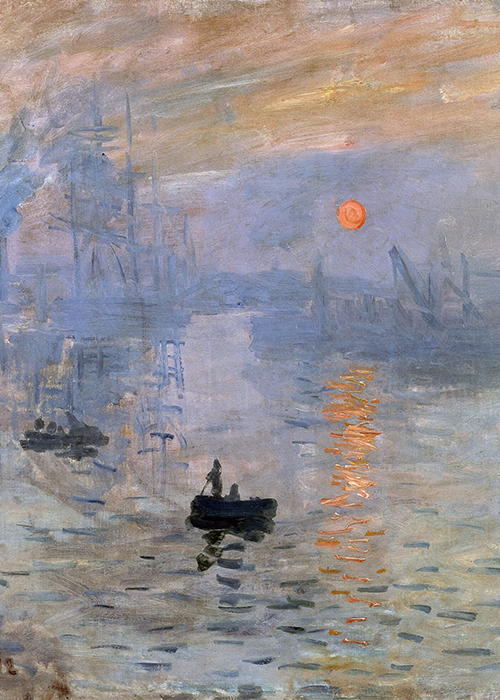
In 1874, Claude Monet and a group of like-minded artists organized an independent exhibition in Paris. Among the works presented was Monet's Impression, Sunrise, a painting depicting the harbor of his hometown, Le Havre, at dawn. At the time, the art world was still dominated by Realism, where clarity, detail, and finish were considered essential. Against this backdrop, Monet's painting appeared almost incomprehensible. Many critics dismissed it outright. Some described it as no better than an unfinished sketch. Others mocked not only the painting itself, but also its title. In a tone of sarcasm, they referred to Monet and his fellow artists as “Impressionists.” What began as ridicule soon became a name—and with it, a movement. From that moment on, Impressionism was born. Today, Impression, Sunrise is regarded as a national treasure of France. More importantly, it marked the beginning of a new chapter in European art and established Monet as a central figure in this transformation.